Lindfield
Trimming garden hedges back into shape
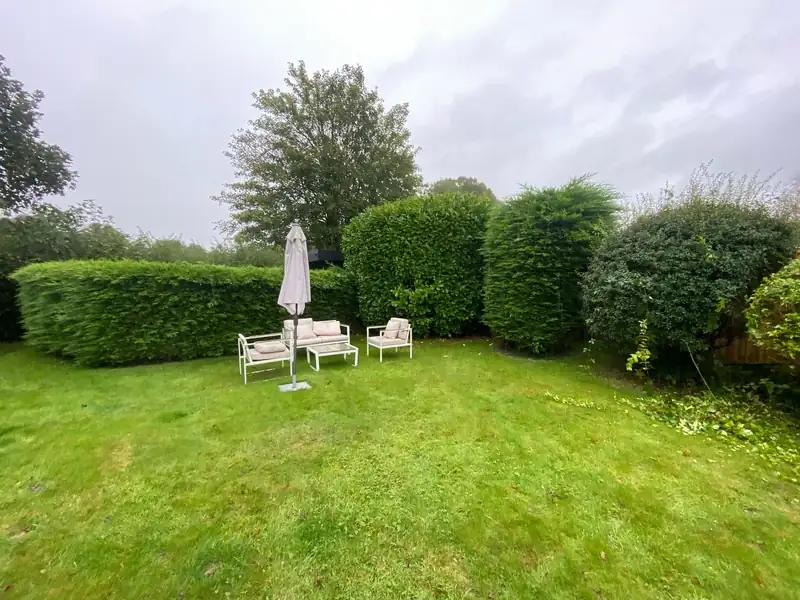
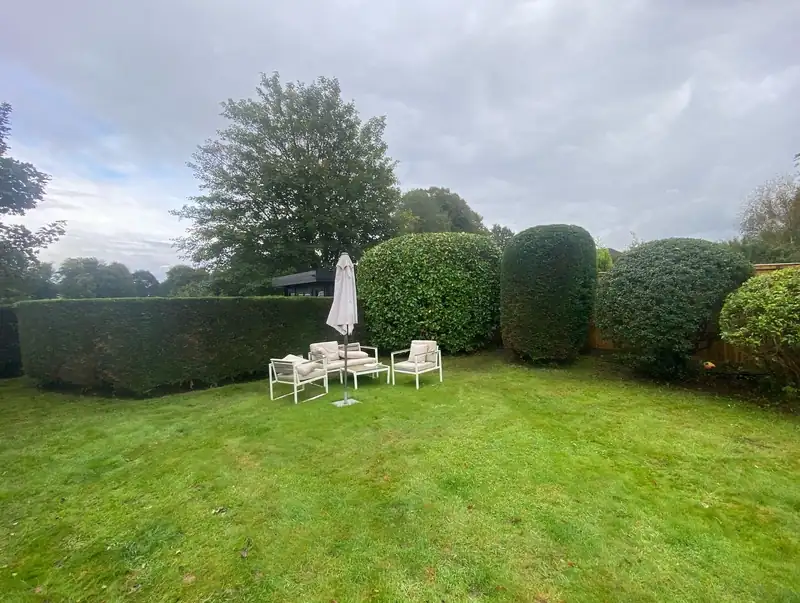
A very wet day in Lindfield bringing these garden hedges back into shape. Before and after.
A classic Sussex village with over 40 medieval timber-framed houses and a conservation area designated in 1969. We provide careful, expert tree care that respects Lindfield’s heritage.

Lindfield’s High Street, lined with lime trees and over 40 medieval and post-medieval timber-framed houses, is one of the most photographed streets in Sussex. The village’s conservation area has been in place since 1969, and the trees that frame this landscape — the limes on the High Street, the oaks on the Common, the beeches in private gardens — are a fundamental part of what makes Lindfield special.
We’ve worked on trees throughout Lindfield for years, from the large gardens around Tall Oaks and the properties backing onto High Weald countryside, to the more compact plots near the village pond. The mix of native trees and garden specimens means every job is different. A crown reduction on a mature lime near the High Street requires a very different approach from removing a self-seeded sycamore from a back garden.
Cricket has been played on Lindfield Common since 1747, and the trees around its edges are part of the village’s identity. Any work on trees near the Common or within the conservation area requires notice to Mid Sussex DC. We handle this as part of every job and make sure the right permissions are in place before any work begins.
Lindfield’s character means most of our work here involves sympathetic pruning and crown management rather than wholesale removal. The village’s proximity to the High Weald AONB means there’s also a mix of native woodland and garden trees to manage. We carry out regular hedge trimming on the yew, beech, and laurel hedges that front many properties along the High Street and surrounding lanes.
Tree getting too big? We’ll reduce its height and spread without ruining its shape. You get more light, less worry about branches, and a tree that still looks natural.
Learn More
Whether you need a new hedge planted or an existing one brought back into shape, we’ll keep it looking sharp all year round.
Learn More
Left with an ugly stump? We grind it out below ground level so you can turf over it, plant something new, or just have your garden back.
Learn MoreIf a tree on your property has a Tree Preservation Order (TPO), you must apply for permission before carrying out any work. Applications are free and can be submitted online via the Mid Sussex e-form or through the national Planning Portal. The council has up to 8 weeks to make a decision. For dead TPO trees, a Five Day Notice must be submitted before work can start; if a tree poses an immediate danger, the minimum work can be done first and the council told as soon as practicable. You can check whether a tree is protected using the council’s interactive TPO map, where green markers indicate confirmed TPOs and blue hatching shows conservation areas.
If your property is within a conservation area, you must give 6 weeks’ written notice to the council before cutting down, topping, or lopping any tree with a trunk diameter over 75 mm (measured at 1.5 m above ground). This notice is submitted using the same form as TPO applications. The council uses the 6-week period to decide whether to place a TPO on the tree. If you do not hear back within 6 weeks, the work may proceed. Mid Sussex has 36 designated conservation areas, including areas in Burgess Hill, Haywards Heath, Cuckfield, Lindfield, Hurstpierpoint, and Keymer.
Mid Sussex DC tree officer (for TPO and conservation-area questions): 01444 458166 or treeenquiries@midsussex.gov.uk
Lindfield
A very wet day in Lindfield bringing these garden hedges back into shape. Before and after.
Lindfield
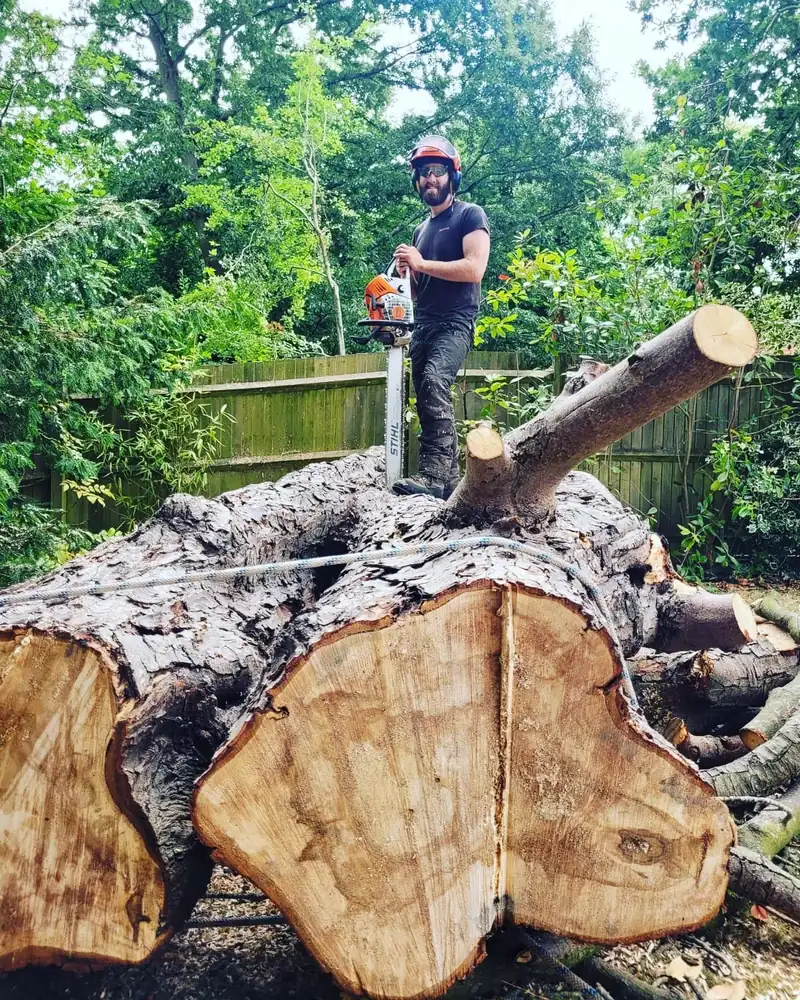
A fair lump in Lindfield: the trunk of this one measured 5ft across at its widest point.
Horsted Keynes
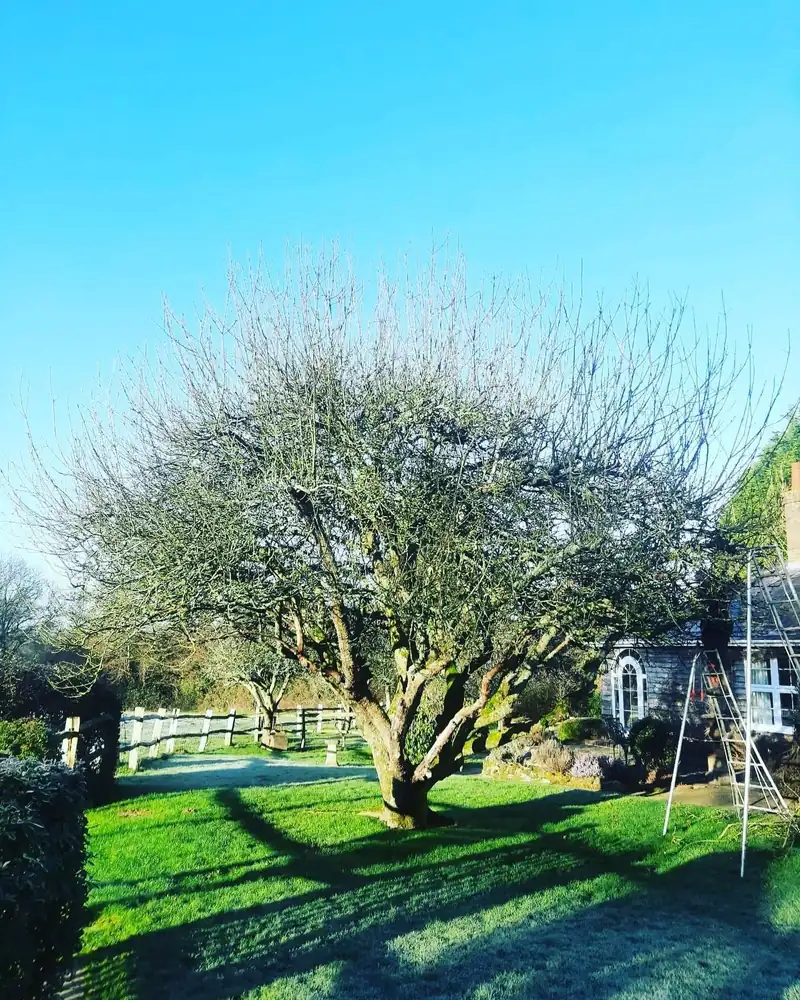
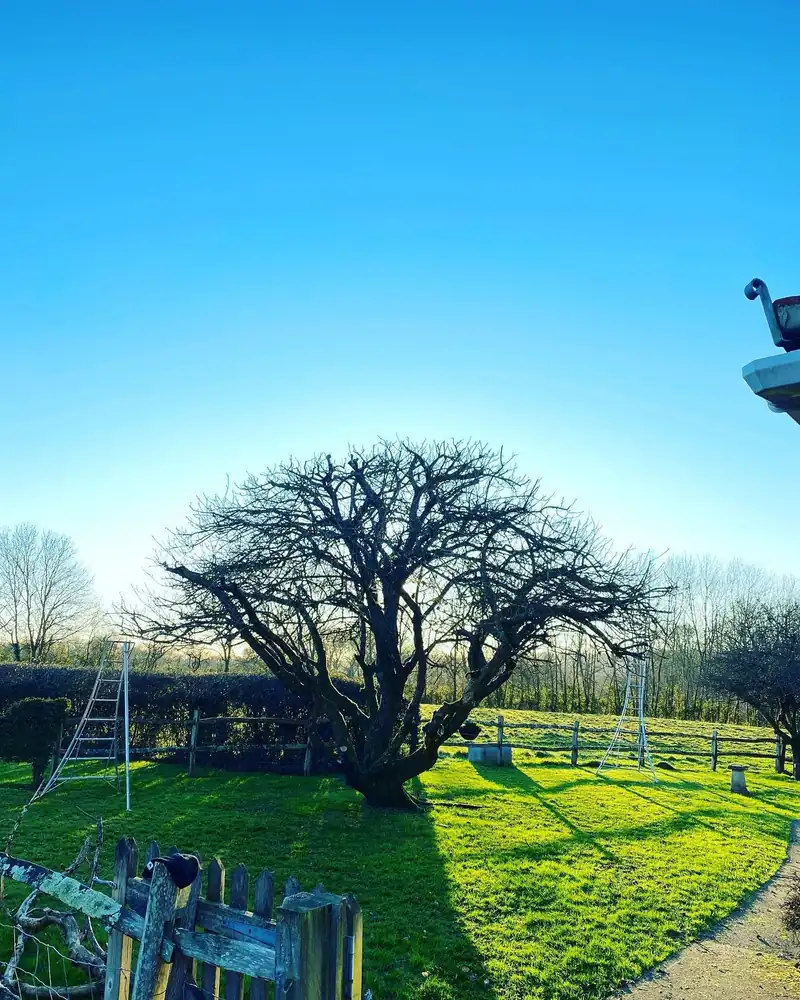
An apple tree reduction, and probably one of the oldest and widest-spreading apple trees we’ve had the pleasure of pruning.
“Ant Took a macrocarpa tree down in our garden. From the initial quote and dealing with the Council to get approval through to the actual job, the work has been exceptional. I am very pleased and would highly recommend.”
“Excellent service from Antony from start to finish. He was professional, friendly and easy to talk to. He took the time to explain the options and suggested the type of work that would suit my tree best. The work was completed quickly and efficiently, and the clean-up afterwards was excellent. There was not a single leaf or branch left on my drive. His pricing was also competitive. I would happily recommend Antony and would use him again.”
“Ant and team did a great job taking down a tree in our garden. Everything was tidied up beautifully at the end and was a good competitive price.”
Plus 9.9/10 from over 200 Checkatrade reviews since 2017
Yes. Lindfield’s conservation area was designated in 1969 and covers much of the historic village, including the High Street, the Common, and the pond. If your property is within this area, you must give Mid Sussex DC six weeks’ notice before carrying out any tree work. We’ll check this for you.
Lime trees in public areas are typically managed by the parish or district council. For limes on private property, we can certainly help. These trees respond well to crown reductions and can be managed sympathetically to maintain the avenue effect that Lindfield is known for.
Yes. Lindfield sits on the edge of the High Weald Area of Outstanding Natural Beauty. While AONB status doesn’t directly restrict tree work in the same way as TPOs or conservation areas, we always work sensitively in these landscapes and ensure our work follows best practice.
Send us a few photos on WhatsApp for a quick estimate, or fill in the form and we'll get back to you within 24 hours.